
Advanced Electronic Materials & Devices (AEMD) Research Group

Research Area
1. Neuromorphic Memory & Computing


The Resistive Random Access Memory (RRAM) and Ferroelectric Random Access Memory (FeRAM) are emerging technologies for simpler structure, faster, highly scalable, and energy-efficient data storage and processing. These technologies have promising potential in neuromorphic memory and computing applications. Emulating the human brain’s neural network, the neuromorphic computing device comprises a capacitive structure with a dielectric layer sandwiched between two metal electrodes. Our group mainly focuses on designing and engineering dielectric materials and the interface of electrode-dielectric layers for neuromorphic memory and computing applications. We are exploring the thin film structures of metal oxides (HfO2, WO3, VO2, etc.), perovskites, and 2D materials with capacitive and metal-oxide-semiconductor structures. The neuromorphic computing performance of the fabricated devices is evaluated by characterizing their synaptic plasticity, specifically through long-term potentiation (LTP) and long-term depression (LTD) measurements. These measured conductance values are then used to computationally assess pattern recognition on the MNIST dataset (including both the standard handwritten digit and Fashion-MNIST clothing datasets), as shown in the figure above.

2. Ferroelectric and Piezoelectric Materials

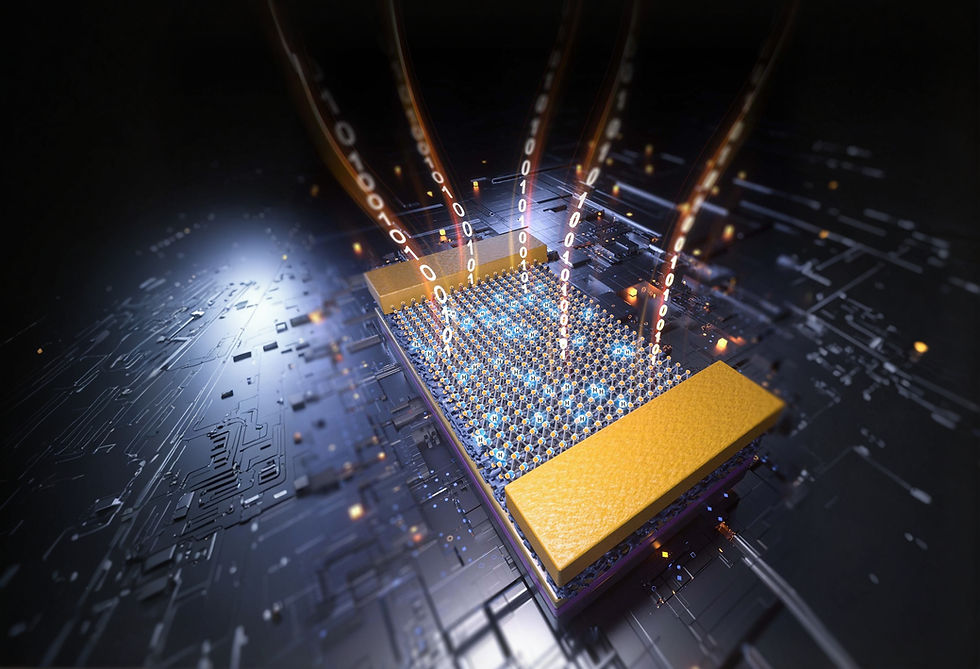
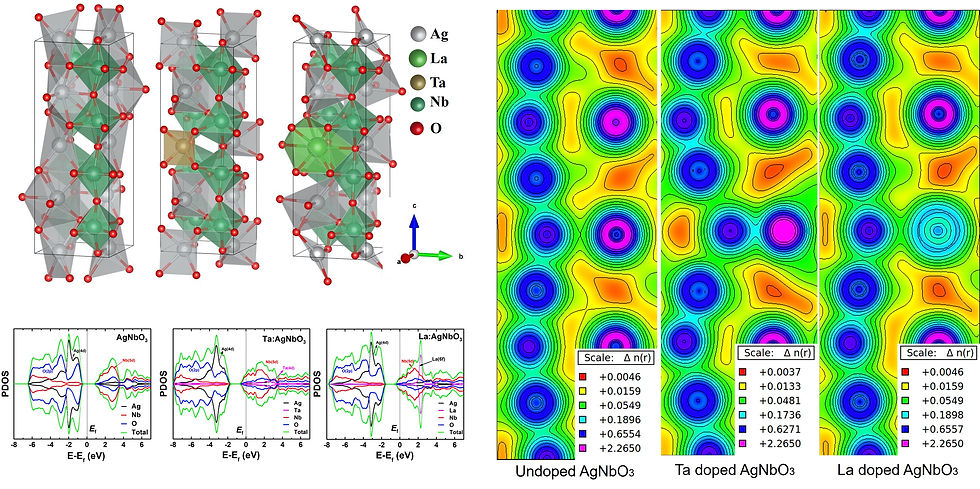
Our research focuses on the discovery and design of novel ferroelectric, relaxor, and antiferroelectric materials. We investigate their fundamental properties and application potential in ferroelectric memory devices (such as FeRAM) and high-energy-density capacitors. A parallel focus is the development of high-performance piezoelectric materials for applications as actuators and sensors.
3. Magnetoelectric Layered structures
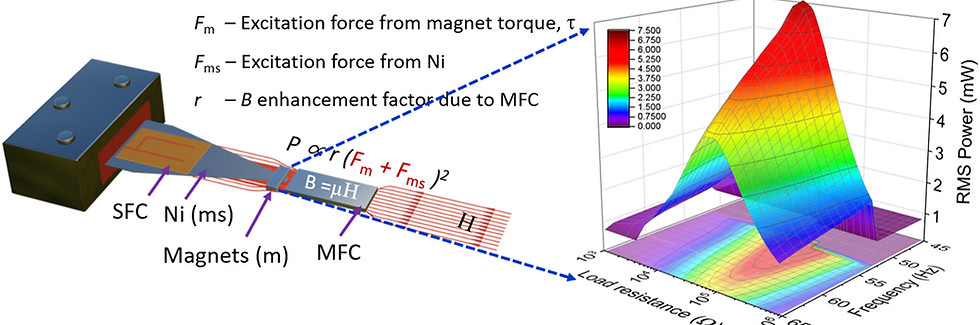

A further research thrust involves the development of magnetoelectric (ME) layered composites and nanoelectromechanical systems (NEMS) for advanced sensing and energy harvesting. We specifically investigate epitaxial piezoelectric thin films grown on magnetostrictive substrates, an architecture with significant potential for low-power biomedical sensors and micro-energy harvesting applications.